Kaspa core developer Michael Sutton said on Tuesday that he still expects a test network for DAGKnight, the consensus protocol meant to replace GHOSTDAG, by the end of 2026. He made the comment during a three-hour Bitcoin Takeover livestream with host Vlad Costea that started at about 2:15 p.m. ET on Nov. 17.
“I mentioned on X a few weeks ago that I think we will get to a testnet by the end of year. I still think so,” Sutton said when a viewer asked when testnet or production code would be visible. He added that the team plans “a big release of materials” in “a few weeks when it’s all ready.” No date for a testnet launch or a mainnet activation has been announced.
DAGKnight: the timeline and the code
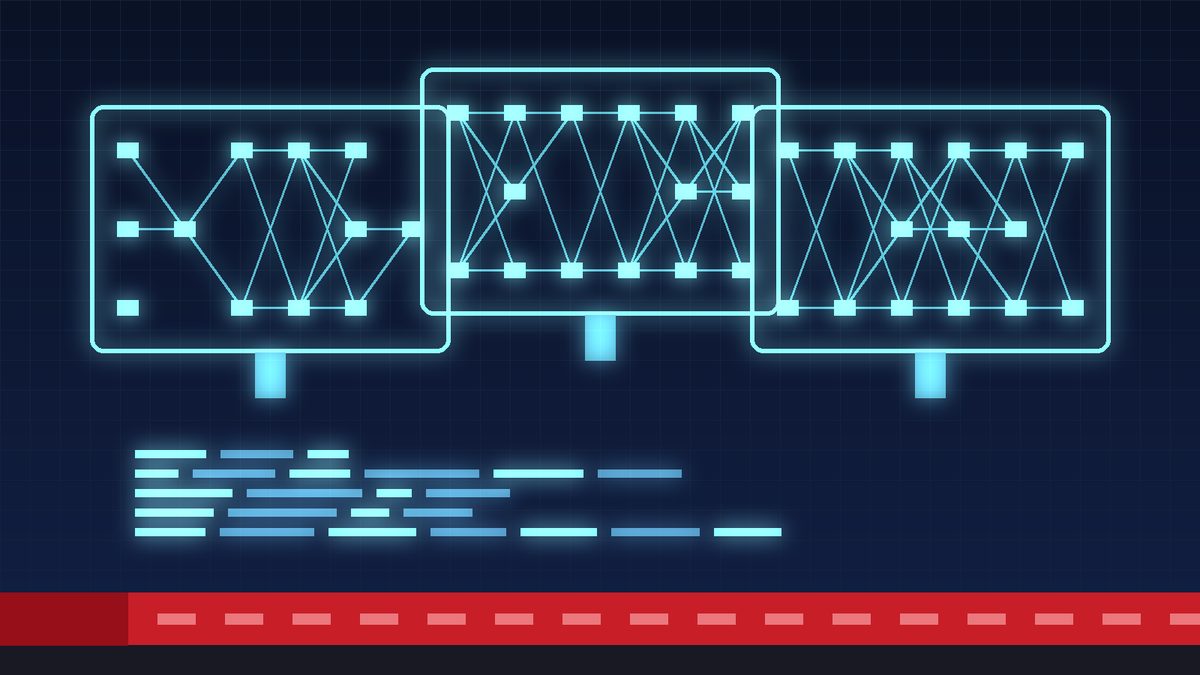
Kaspa is a proof-of-work network built as a BlockDAG. Instead of a single chain where competing blocks are thrown away, it keeps blocks mined in parallel and orders them with a consensus rule called GHOSTDAG. GHOSTDAG relies on a fixed parameter sized for an assumed worst-case network delay. DAGKnight, which Sutton co-authored, is designed to adapt to the delays the network actually experiences, and switching to it would require a hard fork.
Sutton described work moving “on three fronts in parallel.” The team is finalizing the full proof of the protocol, writing a yellow paper that specifies the algorithms “in the language closer to code,” and pushing the implementation forward. He said finishing the proof still “changes small details here and there.”
The timeline repeats what he wrote on X on Oct. 16. “i believe we can get to a stable (and secure) testnet this year,” Sutton (@michaelsuttonil) posted then. At the close of Tuesday’s stream he called a year-end testnet “my plan and hope.”
Public work is visible in the dagknight branch of the rusty-kaspa repository on GitHub. Pull request #1172, “Tiebreaking applied,” opened by developer biryukovmaxim on Nov. 15, is still open and unmerged. Four commits were added to it between 4:33 p.m. and 5:12 p.m. ET on Tuesday, bringing the total to eight.
The new commits add an early stop to the “witness scan,” cap how far that search looks, and rename terms “per review,” according to their commit messages. Tiebreaking decides the outcome when two competing groups of blocks are closely matched. The last pull request merged into the branch was #1168, on Nov. 15.
Community tracker Daniel_Kaspa (@Daniel_Kaspa_KR) noted that the latest automated checks on #1172 passed. The account added that there was “no new official confirmation” on 100 blocks per second, public testing or mainnet activation.
Block rates, ZK proofs and emission
Kaspa produces about 10 blocks per second. Sutton said current node performance would allow 20 blocks per second “already now, but it’s still an effort and it requires a lot of testing.” He said the case for 100 blocks per second is about sampling miners more often, so that users could wait “a second or two” for strong statistical guarantees, rather than about adding transaction capacity.
Costea pushed back near the end of the stream. “Creating capacity for something that doesn’t have demand yet prematurely” makes things harder for everyone, he said. Sutton replied that the goal is frequency, not capacity, and agreed that capacity only matters once current capacity is saturated.
Sutton also said Kaspa can now verify two kinds of zero-knowledge proofs on-chain since the Toccata hard fork in June, including a full STARK proof that needs no trusted setup. Such a transaction “will fill up a block,” he said, so the network could handle about 10 per second if it did nothing else. He described Argent, his multi-contract compiler that sits above SilverScript, as a way to build applications across covenants, Kaspa’s programmable coins.
On mining rewards, Sutton called the emission schedule “the main motivation for everything I’ve been doing in the last year and a half.” He said the aim is enough utility and fee income for the network to “self-sustain without printing more money, so to speak.”
Why it matters
For miners, the issue is concrete. The block reward falls from 1.9445 KAS to 1.8354 KAS on Dec. 5 at 00:30 UTC, according to api.kaspa.org. Daily network hashrate was 312.2 petahashes per second on Wednesday, down from 331.6 PH/s on Monday.
KAS traded at $0.0273 on Wednesday morning, down 24% over 30 days, according to CoinGecko. For builders, a DAGKnight testnet would be the first chance to run software against the new consensus rules. Holders should note that Sutton’s year-end target is a personal expectation, not a committed release date.
What to watch
- Review and merge of PR #1172 and further “[DK]” pull requests.
- The “big release of materials,” including the yellow paper and proof, that Sutton expects within weeks.
- Any announcement of a DAGKnight testnet before Dec. 31, and later a hard-fork proposal with an activation date.
- Hashrate around the Dec. 5 reward reduction.
Sources
- https://www.youtube.com/watch?v=v1FWc5r-Ub0
- https://x.com/Vladcostea/status/2122770598619148556
- https://x.com/michaelsuttonil/status/2110998749463929081
- https://github.com/kaspanet/rusty-kaspa/pull/1172
- https://x.com/Daniel_Kaspa_KR/status/2122861833493364998
- https://x.com/KASPAglobal/status/2122979881294111183
- https://api.kaspa.org/info/halving
- https://www.coingecko.com/en/coins/kaspa