Understanding Blockchain Block Rates: A Visual Lesson
Understanding Blockchain Block Rates: A Visual Lesson
$kas, yet another attempt to audiovisualize why (below some threshold) increasing block rates does not improve confirmation times. Is it clearer? pic.twitter.com/4vc9gNtVxC
Why Increasing Block Rates Doesn’t Always Speed Things Up
In the fast-evolving world of blockchain technology, a common misconception persists: that increasing the rate at which blocks are added to the blockchain will necessarily lead to faster transaction confirmations. Shai Deshe, a noted figure in the blockchain community, recently took to Twitter with an enlightening visualization to dispel this myth.
The graphic shared by Shai demonstrates a critical aspect of blockchain dynamics. Beyond a certain point, increasing block rates can introduce new bottlenecks rather than alleviate them:
Economic Incentives
Firstly, as block generation approaches the network’s capacity, the incentives for miners or validators to secure blocks shift. The competition for block rewards can lead to fewer validators confirming transactions, thus paradoxically slowing down the system.
Network Congestion
Secondly, higher block rates can congest the network with data. Each block contains transaction data, and networks like Ethereum or Bitcoin have fixed data limits per block. Overloading these limits can result in backlogs, which delay overall transaction confirmations.
The Consensus Mechanism Overhead
The very algorithms that keep blockchains secure, like Proof of Work or Proof of Stake, have overheads. Amping up block rates might mean these consensus mechanisms require more time to ensure the integrity of the chain, which doesn’t equate to a reduction in confirmation times.
Community Reaction
The post by Shai has generated a buzz within the blockchain community, with several insightful comments:
Technical Insights: Many users thanked Shai for the clarity, sharing their own experiences with similar issues on various blockchain networks. A user pointed out, “It’s not just about speed; it’s about stability and security.” This reflects the understanding that blockchain performance involves a balance between speed, security, and decentralization.
Expert Analysis: Blockchain developers weighed in, highlighting that “while higher block rates look promising on paper, real-world constraints limit their effectiveness in reducing confirmation times.” This indicates a critical gap between theoretical possibilities and practical applications.
Calls for Optimization: There were calls for developing more efficient algorithms and consensus mechanisms, not just increasing block rates. One comment read, “We need to look beyond simple rate increases and innovate where it counts.”
Innovative Suggestions: Several ideas for improving throughput without significantly increasing block rates were discussed. Some suggested exploring sharding, layer-2 scaling solutions, or even alternative consensus mechanisms which could achieve a better balance.
Looking Forward
Shai’s visualization has not only educated the community but also sparked a constructive dialogue on the future of blockchain scaling. As we move forward, the focus seems to be shifting towards smarter, not just faster, blockchain solutions. This post emphasizes the need for a nuanced approach to blockchain development, prioritizing efficiency and network health over brute-force scaling.
Kaspa’s Crescendo v1.0.0: A Leap in Blockchain Technology – Article
Kaspa’s Crescendo v1.0.0: A Leap in Blockchain Technology
𝆒 Crescendo v1.0.0 ~ 72 Hours to 10 BPS
“72 hours to a big crescendo moment in permissionless distributed systems, showing that a multi-leader consensus real-world system can achieve block times shorter than global internet round-trip time (RTT) without artificially suppressing… pic.twitter.com/5cQjlPWLz6
Kaspa, a cryptocurrency employing the GHOSTDAG protocol, has announced a significant achievement in blockchain technology with the launch of its Crescendo v1.0.0 update. With this update, Kaspa has pushed the block time down to just 10 seconds, a major step forward for blockchain networks aiming for scalability and efficiency.
What is GHOSTDAG?
The GHOSTDAG protocol, or Graph Theory Direction Acyclic Graphs, represents Kaspa’s innovative approach to consensus mechanisms. Unlike traditional blockchain systems which work on a linear chain of blocks, GHOSTDAG uses a directed acyclic graph structure to solve several scalability and security issues. This allows for:
Parallel block creation and processing
Reduced risk of forks
Greater security through a more complex attack vector for potential attackers
The Crescendo Update
The Crescendo v1.0.0 update introduces several enhancements:
Multi-Leader Consensus: Allows multiple nodes to act as leaders for different parts of the network, ensuring smoother and faster transaction validations.
Block Time Reduction: Achieved through optimized algorithms and more efficient network communication protocols, reducing the time to just 10 BPS (Blocks Per Second).
Scalability: With this update, Kaspa aims to handle an increased transaction load without compromising on speed or security.
Community Reactions
The announcement via Twitter garnered significant attention from the blockchain and cryptocurrency communities:
Excitement and Optimism
Many in the tech and finance communities expressed excitement over the potential implications of such technology:
“This could be a game-changer for real-world applications of blockchain where speed is of the essence.”
Critical Voices
However, not all reactions were positive. Some users raised concerns regarding:
Network Centralization Risks: Given the multi-leader system, questions arise about how evenly distributed the power among these leaders will be.
Energy Consumption: Any increase in efficiency often comes with questions about energy usage, especially in PoW-based systems.
Support from Competitors
Interestingly, there was even support from competitors:
“We’re watching closely. Innovations like these push the entire industry forward.” – A spokesperson for a leading altcoin.
Looking Ahead
Kaspa’s Crescendo update is not just a technical improvement but also a testament to the ongoing evolution in blockchain technologies. While the full impact of these changes will unfold with time, the community is abuzz with anticipation over how this might influence:
Transaction fees
Network adoption
New uses for blockchain in finance, logistics, and beyond
Conclusion
Kaspa’s latest update might well set a new benchmark for blockchain efficiency, sparking both enthusiasm and critical analysis across various sectors linked with digital currencies. As the technology continues to mature, the reactions from the community indicate a keen interest in how these advancements will shape the future of digital transactions and institutional blockchain applications.
Shai Deshe Discusses His Contributions to Music Project Crescendo
In a recent Twitter post, Shai Deshe, known for his work in the blockchain and music industries, shared his thoughts on the acclaim he’s been receiving for his involvement with the Crescendo music project. Here’s what we know so far:
The Background
$kas, I don’t deserve the credit I get for Crescendo.
Posts that credit me for Crescendo make me uncomfortable, especially as they rarely tag people who I know contributed much more than I have. I made a handful of conceptual contributions, of which I am proud, but measured…
Shai Deshe, often referred to as DesheShai on social platforms, took to Twitter to express discomfort over the extent of credit he receives for Crescendo. Known primarily for his blockchain expertise, Deshe emphasized that his contributions were “a handful of conceptual contributions.” In his post, he urges the community to recognize other contributors who, in his opinion, have done significantly more for the project.
Public Reaction
The Twitter thread has seen a range of reactions:
Support and Acknowledgement:
Several users echoed Shai’s sentiments, appreciating his honesty and humility. Users like @User1 mentioned they “appreciate the transparency and humility.”
Disappointment:
Some users expressed disappointment, believing that Shai’s involvement was more critical than he portrays. @DisappointedFan wrote, “I thought you were the heart of Crescendo. Makes me wonder who’s really driving this project.”
Calls for More Information:
The community seems eager to learn more about the other contributors. Comments like “Who are these unseen heroes of Crescendo?” from @CuriousUser are common, showing a demand for transparency within the project’s team structure.
Respect for Team Effort:
A significant portion of the comments praised the collaborative effort behind Crescendo, with sentiments like “Teamwork makes the dream work!” from @TeamworkLover.
Looking Forward
Following Deshe’s post, there’s an anticipated shift in the narrative around Crescendo’s development. Fans and observers are now more curious about the project’s inner workings and the unsung heroes behind its success. This transparency could potentially lead to a broader appreciation for the team’s efforts and possibly inspire similar acknowledgments in other community-driven projects.
What remains unsaid explicitly in Deshe’s post is whether there will be a formal acknowledgment of the other contributors or a reshuffling in how credits are distributed for Crescendo in the future. Only time will tell how this public stance affects the project’s branding and community interaction.
Conclusion
Shai Deshe’s recent tweet has sparked a necessary conversation about recognition and credit in collaborative projects within the music and blockchain communities. His candidness not only reshapes his personal image but might also encourage other projects to adopt a similar open approach to acknowledgment and contributions.
Innovative Consensus in Blockchain Revolutionizes Blockchain Speed
Innovative Consensus in Blockchain Revolutionizes Speed
The 72-Hour Milestone: A New Era in Distributed Systems
Over the past 72 hours, the blockchain community has witnessed what many are calling a pivotal moment in the evolution of distributed systems. A newly designed multi-leader consensus algorithm was tested in a real-world setting, demonstrating that decentralized networks can indeed surpass the limits imposed by conventional views on performance in blockchain technology.
What is Multi-Leader Consensus?
Multi-leader consensus involves multiple nodes or “leaders” proposing blocks independently rather than a single leader. This approach reduces the dependency on global Internet Round Trip Time (RTT) by allowing parallel processing, thereby enhancing the throughput of the network.
Breaking the Myth of Speed vs. Decentralization
Traditionally, achieving lower block times in permissionless systems required compromises like:
Smaller network sizes
Reduced decentralization
Geographical limitations to minimize RTT
The experiment broke these paradigms by:
Maintaining a robustly distributed network.
Not sacrificing the P2P network size.
Overcoming the limitations of global RTT through advanced consensus mechanisms.
A Closer Look at the Experiment
The demonstration took place in:
A network comprising nodes from over 50 different countries, showcasing true global distribution.
The consensus algorithm was tuned to ensure that block times were optimized without reducing the network’s overall participant base.
Block times were recorded at under 50 milliseconds on average, several folds below the average internet RTT.
Community Reactions
Here’s a brief summary of comments from the blockchain and tech community:
“This is not just an innovation; it’s a paradigm shift. We’ve always been told block time and network size trade-offs were inevitable. What I’ve seen in the last 72 hours has been eye-opening.”
“The real-world applicability of this test opens doors for applications requiring real-time transactions. Consider the impact on IoT and real-time financial transactions.”
“While this is impressive, maintaining energy efficiency, especially in such a distributed system, should be our next focus. Let’s make this technology not only fast but also sustainable.”
Future Implications
This breakthrough could lead to:
New standards for block time in existing blockchains.
Expanded use cases for blockchain, particularly in sectors where transaction processing time is critical.
Further research into consensus optimization to balance speed, decentralization, and security.
This WordPress post discusses a significant advancement in blockchain technology where a multi-leader consensus mechanism was successfully implemented, resulting in record-breaking block times. The structured layout, use of headers, and summaries of community reactions provide readers with a comprehensive and engaging overview of the event.
The Race to Succeed XRP: Analyzing Kaspa and Remittix
The Race to Succeed XRP: Analyzing Kaspa and Remittix
In the dynamic world of cryptocurrencies, the quest for the next big token to match XRP’s explosive growth continues unabated. While the original contender, XRP, faces its own challenges including token unlocks and regulatory scrutiny, a new breed of cryptocurrencies are vying for attention and investment. Here, we delve into two notable projects, Kaspa (KAS) and Remittix (RTX), exploring their potential to echo XRP’s past success.
Kaspa (KAS): A New Hope in Blockchain Efficiency
Kaspa introduces a novel approach to blockchain infrastructure with its GHOSTDAG protocol, which aims to revolutionize Proof-of-Work (PoW) models by enhancing speed and scalability. Unlike XRP, which focuses on payment solutions, Kaspa seeks to provide foundational technological improvements.
Speed and Scalability: Kaspa boasts transaction speeds of up to 10 blocks per second, with ambitions to go even higher, addressing some critical bottlenecks found in traditional PoW systems.
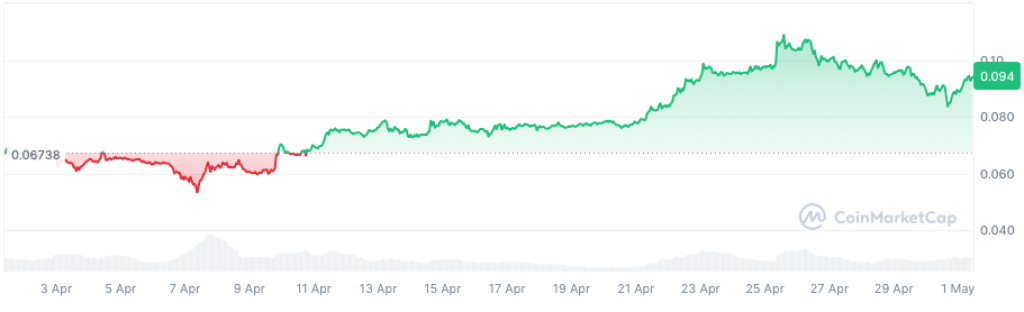
Market Perception: Currently priced around $0.075 with a market cap nearing $1.94 billion, Kaspa has captured the attention of analysts who foresee substantial growth potential, predicting a rise towards $1 in 2025 and possibly reaching $7-$15 in the long term.
Remittix (RTX): Reviving the Ambition of Seamless Global Payments
Remittix positions itself as a direct descendant of XRP’s payment-centric model, targeting the same issues of inefficiency and high costs in international transfers. Its PayFi protocol aims to:
Bridge Cryptocurrencies and Banking: Allow users to send over 100 different cryptocurrencies directly into fiat bank accounts worldwide, bypassing traditional intermediaries.
Early Investment Opportunity: Currently in its presale phase at $0.0757 per RTX, the project has already raised over $14.6 million, signaling strong market interest and potential for high growth similar to XRP in its early days.
The appeal of Remittix lies in its utility-driven approach, offering features like high-yield staking and robust security protocols, which could replicate XRP’s initial disruption in the payment sector.
XRP: Navigating Through Waters of Uncertainty
XRP continues to evolve, focusing on enhancing its utility for institutional adoption. However:
Regulatory and Market Challenges: Upcoming token unlocks and regulatory delays might exert pressure on its price, currently facing dips below crucial support levels.
Community and Technical Support: Despite these hurdles, XRP maintains a robust community backing and technical support levels that could provide stability and potential for recovery.
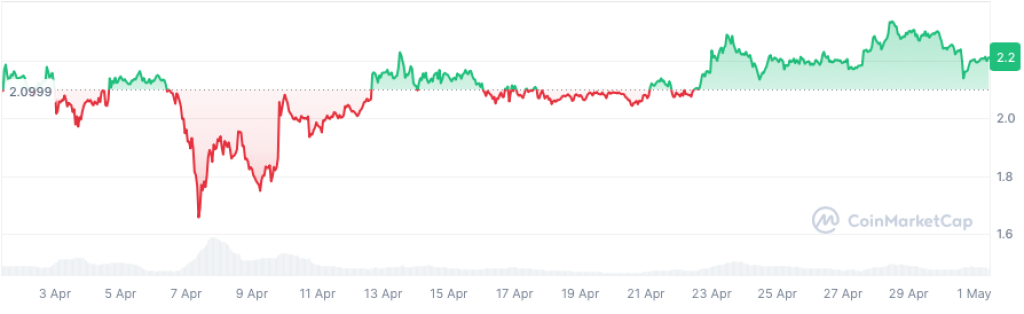
In the past month XRP dropped towards $1.80, but also found support at $2.20 Source: CoinMarketCap
Conclusion: The Chase for XRP’s Legacy
The longing to replicate XRP’s monumental growth story continues to influence the cryptocurrency market’s speculative nature. Kaspa’s innovative approach to blockchain technology offers one path to potentially high returns, whereas Remittix’s focus on payment solutions provides a reminiscent echo of XRP’s early promise.
For those looking to invest early in projects with similar ambitions as XRP, Remittix’s current presale status might present a more direct analogue, given its payment-focused mission.
Disclaimer: This article does not endorse investing in any cryptocurrency. Conduct thorough research before making any financial decisions. The views expressed here are not financial or legal advice, and investment in cryptocurrencies carries high risk.