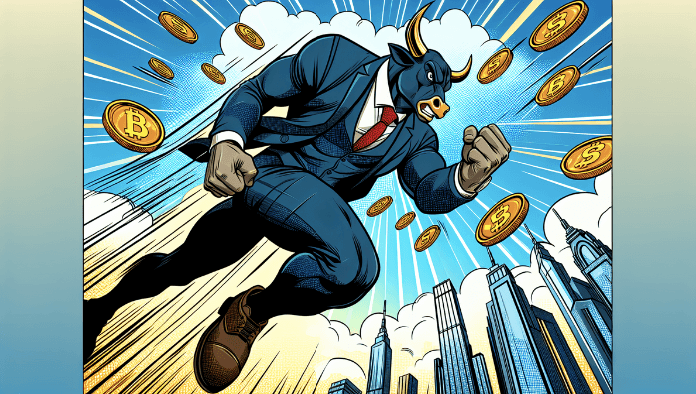
The crypto market has been experiencing significant volatility in recent months, highlighting both the risks and opportunities for investors. A broader market downturn has weighed heavily on both Bitcoin and altcoins. While Bitcoin’s price has historically been an indicator of the overall crypto market’s trajectory, more discerning investors have taken notice of how specific altcoins tend to behave independently, especially during prolonged downtrends. Altcoins, or alternative cryptocurrencies, often see exaggerated swings compared to Bitcoin—both to the upside and downside—as they tend to be more speculative and less established.
During challenging market conditions, interest in altcoins usually declines, as investors shy away from smaller, riskier assets in favor of more traditional or established options like Bitcoin or stablecoins. However, it is precisely in these downtrends that savvy investors tend to start researching and positioning themselves for the next market cycle. Historically, altcoin prices have displayed a dramatic resurgence during bull runs after periods of dormancy, making bear markets a crucial time for smart money to accumulate in carefully selected projects.
The current slowdown in the market is being attributed to various macroeconomic factors, including inflation concerns, geopolitical tensions, and shifts in monetary policies around the globe. Furthermore, regulatory scrutiny on cryptocurrencies, particularly from U.S. agencies, has resulted in increased uncertainty, which is negatively affecting investor sentiment. This regulatory pressure is more pronounced on smaller, up-and-coming cryptocurrencies as they tend to be perceived as higher risk compared to well-established market players.
While altcoins have fallen sharply in recent months, seasoned investors see this as an inevitable and temporary part of the market cycle. In fact, they argue that this downturn could ultimately create the ideal accumulation phase, where select altcoins are trading at a steep discount. Consequently, these drops are considered windows of opportunity for investors who are aiming for large returns in the next bull market. Historically, some altcoins have provided gains upward of 5,500% in similar cycles, which is why many market experts are recommending research and cautious entry into promising projects now.
Some elements also work in favor of altcoins during these turbulent times. Developers continue to innovate on Layer-1 and Layer-2 solutions, decentralized finance (DeFi) platforms are expanding their usability, and infrastructure around important emerging technologies like NFTs (non-fungible tokens) remains robust. Many newer altcoins are developing utility and use cases that could allow them to break from Bitcoin’s shadow and chart their own path. These factors are poised to drive significant growth in select altcoins during the next upward phase of the market.
It’s important to note, however, that the altcoin market is still largely speculative. Investors are advised to conduct thorough research, evaluating the underlying technology, use cases, and community engagement of any altcoin before taking any positions. In uncertain markets, this diligence becomes even more crucial, as many projects fail to recover fully once market sentiment improves. Still, for those willing to take the risk, the opportunities for exponential gains remain a possibility, making altcoins an appealing option for strategic investors looking to capitalize on the market’s eventual recovery.
Why top investors are betting on altcoins
Investors looking to maximize their returns during the next market boom must be observant of trends that go beyond Bitcoin and Ethereum, as they often only represent the tip of the crypto iceberg. While Bitcoin continues to maintain its dominance, the fascination of many investors has been shifting toward altcoins due to their higher potential for exponential growth. In contrast to Bitcoin, which is primarily viewed as a store of value or “digital gold,” altcoins typically offer a larger variety of use cases, including smart contracts, decentralized finance (DeFi), enterprise adoption, and even specific utilities in burgeoning areas like gaming and Web3 innovation.
A key reason top investors are betting heavily on altcoins is the risk-reward profile these assets present. While altcoins may carry more inherent volatility, they also offer the promise of far greater upside potential compared to larger and more established cryptocurrencies. During periods of low market activity and severe downturns, altcoins frequently experience deep price corrections—falling 70% to 90% from their peaks—but these same assets can see explosive returns when the market begins to recover. In past cycles, smaller coins have outperformed Bitcoin and Ethereum by significant margins, drawing the attention of both retail and institutional investors seeking life-altering gains.
Top-tier venture capital firms, crypto whale investors, and even tech companies are increasingly diversifying their portfolios to include altcoins with breakthrough potential. Many are shifting to strategically accumulate tokens in the bear market, utilizing methods like over-the-counter (OTC) purchases and staking rewards to quietly build a substantial position without driving prices up prematurely. This long-term approach aligns with the historical trend that several altcoins achieve their best growth not during market peaks but when they’re still under the radar and at a fundamental development stage.
Another significant consideration for these investors is the rapid pace of innovation in blockchain technology and related sectors. Altcoins often represent a multitude of emerging technologies, such as decentralized financial systems (DeFi), non-fungible tokens (NFTs), interoperable applications, Layer-2 scaling solutions, and alternative consensus mechanisms. These innovations are catalyzing entire ecosystems, offering significant value propositions that Bitcoin simply cannot match. For example, several altcoins are being positioned as the foundation for the next wave of decentralized apps (dApps) or as infrastructure for Web3 solutions, a space that is only now beginning to unfold.
Moreover, many influential investors view altcoins as vehicles for staking and passive income generation through yield farming and liquidity provisioning on decentralized exchanges (DEXs). These decentralized protocols reward users who commit their tokens to the platform, offering an additional value stream in terms of token rewards, governance privileges, and in some cases even profit-sharing. Given the long-term vision held by many in the space, the passive income potential makes holding these altcoins a much more attractive proposition than a simple speculative bet.
While acknowledging the risks inherent to altcoin investment, top investors believe that this segment’s risk-adjusted returns can be exceptional for those who manage to identify the right projects. Smart contract platforms, especially, are receiving heightened attention due to the upcoming trend of decentralized applications gaining mass usability. As regulatory clarity slowly progresses, more use cases for altcoins could become legitimized, further driving demand.
Ultimately, the altcoin market provides opportunities for diversification and exposure to next-generation technology, sectors of the financial system, and emerging digital economies. For this reason, many leading investors see these assets not as speculative gambles but rather as essential pieces of a well-rounded, future-forward financial portfolio.
Breakdown of 6 altcoins with high growth potential
As investors search for the next big opportunity, several altcoins are emerging as frontrunners due to their potential to deliver exceptional returns in the next bullish phase. Below, we explore six altcoins that have captured the attention of leading investors, with each project offering unique advantages in terms of technology and long-term growth potential.
CYBRO Presale Climbs Past Million: A One-in-a-Million DeFi Investment Opportunity
CYBRO is capturing the attention of crypto whales as its exclusive token presale quickly surges above million. This cutting-edge DeFi platform offers investors unparalleled opportunities to maximize their earnings in any market condition.
Experts predict a potential ROI of 1200%, with CYBRO tokens available at a presale price of just [gpt_article topic=”Alert: Market Downturn Alert! Leading Investors Focusing on These 6 Altcoins for Possible 5,500% Gains in the Next Bull Market” directives=”Format the text for embedding in a WordPress post, using HTML tags. Reword the
CYBRO Presale Climbs Past $3 Million: A One-in-a-Million DeFi Investment Opportunity
CYBRO is capturing the attention of crypto whales as its exclusive token presale quickly surges above $3 million. This cutting-edge DeFi platform offers investors unparalleled opportunities to maximize their earnings in any market condition.
Experts predict a potential ROI of 1200%, with CYBRO tokens available at a presale price of just $0.03 each. This rare, technologically advanced project has already attracted prominent crypto whales and influencers, indicating strong confidence and interest.
Holders of CYBRO tokens will enjoy lucrative staking rewards, exclusive airdrops, cashback on purchases, reduced trading and lending fees, and a robust insurance program within the platform.
With only 21% of the total tokens available for this presale and approximately 80 million already sold, this is a golden opportunity for savvy investors to secure a stake in a project that’s truly one in a million.
XRP: A Low-Cost Cryptocurrency for Borderless Transactions
XRP is a cryptocurrency supported by the XRP Ledger. It is designed as a digitally native, programmable currency that is low-cost, open, borderless, and resistant to censorship or counterfeiting. XRP operates on a decentralized system without a central authority. Transactions are irreversible and secure, and do not require a bank account for settlements. Created by Jed McCaleb, Arthur Britto, and David Schwartz, XRP was launched with an initial 100 billion supply, with 80 billion gifted to Ripple for further development. Ripple uses XRP to improve network liquidity and support the ecosystem, placing 55 billion XRP in escrow for controlled supply release. XRP aims to facilitate seamless payment transfers across various currencies.
Cardano (ADA): A Sustainable and Scalable Blockchain for Smart Contracts
Cardano is a major cryptocurrency platform designed for smart contracts. It enables the creation of decentralized finance apps, crypto tokens, and games. Its native coin, ADA, competes with Ethereum’s ETH. Users can store value, make payments, and stake on the network. Cardano uses the energy-efficient Ouroboros proof-of-stake mechanism. This makes it more environmentally sustainable than proof-of-work systems. The platform is divided into two layers: the Cardano Settlement Layer for transactions and the Cardano Computing Layer for smart contract computations. This design enhances its ability to process transactions, potentially up to 1 million per second. Cardano native tokens offer secure, low-fee interactions with smart contracts, improving blockchain efficiency and scalability.
Kaspa: Revolutionizing Proof-of-Work with GHOSTDAG for High-Speed, Scalable Consensus
Kaspa introduces a new approach to proof-of-work cryptocurrencies with its GHOSTDAG protocol. Unlike traditional blockchains, GHOSTDAG allows blocks created simultaneously to coexist and orders them in consensus without discarding any. This means Kaspa’s blockchain is a blockDAG, a generalization of the Nakamoto consensus. It enables secure operations with very high block rates, currently achieving 1 block per second. Confirmation times are very short, mainly limited by internet latency. Kaspa includes features like Reachability for querying the DAG’s structure, block data pruning, SPV proofs, and subnetwork support. These features aim to make the implementation of layer 2 solutions easier in the future.
Sui: A Scalable and User-Friendly Layer-1 Blockchain Platform
Sui is a new layer-1 blockchain platform designed to meet the needs of global adoption. It offers a secure, powerful, and scalable development environment. By using an object-centric data model and the Move programming language, Sui addresses inefficiencies found in existing blockchains. It focuses on improving user experience by removing common barriers in blockchain interactions. With features like zkLogin, sponsored transactions, and programmable transaction blocks, Sui aims to make Web3 applications more accessible and user-friendly.
Stellar Lumens (XLM): Bridging Global Finance with Blockchain Technology
Stellar (XLM) is a decentralized, open-source network that uses blockchain to allow quick and low-cost transfers of funds. It does not favor any national currency and has its own cryptocurrency called Stellar Lumens. Since its inception, Stellar to make this article unique but mean the same thing as the original.”].03 each. This rare, technologically advanced project has already attracted prominent crypto whales and influencers, indicating strong confidence and interest.
Holders of CYBRO tokens will enjoy lucrative staking rewards, exclusive airdrops, cashback on purchases, reduced trading and lending fees, and a robust insurance program within the platform.
With only 21% of the total tokens available for this presale and approximately 80 million already sold, this is a golden opportunity for savvy investors to secure a stake in a project that’s truly one in a million.
XRP: A Low-Cost Cryptocurrency for Borderless Transactions
XRP is a cryptocurrency supported by the XRP Ledger. It is designed as a digitally native, programmable currency that is low-cost, open, borderless, and resistant to censorship or counterfeiting. XRP operates on a decentralized system without a central authority. Transactions are irreversible and secure, and do not require a bank account for settlements. Created by Jed McCaleb, Arthur Britto, and David Schwartz, XRP was launched with an initial 100 billion supply, with 80 billion gifted to Ripple for further development. Ripple uses XRP to improve network liquidity and support the ecosystem, placing 55 billion XRP in escrow for controlled supply release. XRP aims to facilitate seamless payment transfers across various currencies.
Cardano (ADA): A Sustainable and Scalable Blockchain for Smart Contracts
Cardano is a major cryptocurrency platform designed for smart contracts. It enables the creation of decentralized finance apps, crypto tokens, and games. Its native coin, ADA, competes with Ethereum’s ETH. Users can store value, make payments, and stake on the network. Cardano uses the energy-efficient Ouroboros proof-of-stake mechanism. This makes it more environmentally sustainable than proof-of-work systems. The platform is divided into two layers: the Cardano Settlement Layer for transactions and the Cardano Computing Layer for smart contract computations. This design enhances its ability to process transactions, potentially up to 1 million per second. Cardano native tokens offer secure, low-fee interactions with smart contracts, improving blockchain efficiency and scalability.
Kaspa: Revolutionizing Proof-of-Work with GHOSTDAG for High-Speed, Scalable Consensus
Kaspa introduces a new approach to proof-of-work cryptocurrencies with its GHOSTDAG protocol. Unlike traditional blockchains, GHOSTDAG allows blocks created simultaneously to coexist and orders them in consensus without discarding any. This means Kaspa’s blockchain is a blockDAG, a generalization of the Nakamoto consensus. It enables secure operations with very high block rates, currently achieving 1 block per second. Confirmation times are very short, mainly limited by internet latency. Kaspa includes features like Reachability for querying the DAG’s structure, block data pruning, SPV proofs, and subnetwork support. These features aim to make the implementation of layer 2 solutions easier in the future.
Sui: A Scalable and User-Friendly Layer-1 Blockchain Platform
Sui is a new layer-1 blockchain platform designed to meet the needs of global adoption. It offers a secure, powerful, and scalable development environment. By using an object-centric data model and the Move programming language, Sui addresses inefficiencies found in existing blockchains. It focuses on improving user experience by removing common barriers in blockchain interactions. With features like zkLogin, sponsored transactions, and programmable transaction blocks, Sui aims to make Web3 applications more accessible and user-friendly.
Stellar Lumens (XLM): Bridging Global Finance with Blockchain Technology
Stellar (XLM) is a decentralized, open-source network that uses blockchain to allow quick and low-cost transfers of funds. It does not favor any national currency and has its own cryptocurrency called Stellar Lumens. Since its inception, Stellar has aimed…
Strategies for positioning ahead of the next bull market
Since its inception, Stellar has aimed to bridge the gap between traditional finance and blockchain technology, providing accessible, low-fee cross-border payment solutions for both individuals and institutions. By positioning itself as a decentralized alternative to the conventional banking system, it leverages the power of blockchain for settling international transactions in real-time. This level of utility has made Stellar a go-to solution for remittance and micropayments, particularly in underbanked regions. Stellar Lumens (XLM), the network’s native cryptocurrency, plays a key role in facilitating low-cost transfers and acting as a bridge between different currencies, ensuring smooth financial flows even in the most volatile market conditions.
What separates Stellar from other blockchain projects is its unique approach to creating partnerships with traditional financial systems. Major collaborations with companies like IBM have already been established to enhance cross-border payments using the Stellar network. Through these partnerships, Stellar has demonstrated its ability to scale and build a robust ecosystem that integrates traditional market players with next-gen financial technology.
Stellar also places a significant focus on sustainability, ensuring that transactions conducted on its platform are both fast and energy-efficient compared to many other blockchain solutions. The network’s consensus protocol doesn’t rely on miners or traditional proof-of-work mechanisms, making it scalable and environmentally friendly. This gives Stellar a competitive edge in regions where regulations are tightening around the energy consumption of blockchain activities.
Despite the bearish market, Stellar’s consistent growth in terms of use cases and partnerships has maintained institutional interest. Investors see it as a pragmatic tool for global finance, aligning with increasing demand for seamless, secure, and cost-effective payment frameworks in the future.
As cryptocurrency continues to evolve, the spotlight on **altcoins**—or alternative cryptocurrencies to Bitcoin—is growing. Altcoins represent a thriving segment of the digital currency market, offering investors diverse opportunities beyond just Bitcoin. These alternative coins vary widely in their use cases, technical foundations, and levels of innovation. While some focus on improving the limitations of Bitcoin, others introduce entirely new applications that extend beyond peer-to-peer digital payments. As the crypto landscape moves toward broader adoption, many altcoins are positioning themselves as key players, with the potential to yield substantial gains for early investors.
Altcoins have different categories, including **stablecoins**, **utility tokens**, **privacy coins**, and even **governance tokens**. Each type functions uniquely within decentralized ecosystems, and many of their price trajectories are driven not just by speculation but also by new technological breakthroughs or adoption in real-world applications. For instance, some altcoins like Ethereum (ETH) have pioneered smart contract functionality, enabling the rise of decentralized applications (dApps), which now power decentralized finance (DeFi) and numerous blockchain-based innovations, including non-fungible tokens (NFTs).
The exciting potential of altcoins becomes clear when analyzing their underlying technological advancements and the problems they solve. Many of these coins introduce valuable solutions in areas such as transaction speed, scalability, and sustainability, which have been long-standing challenges in the blockchain space. For example, **Ethereum’s upcoming Sharding**, **Cardano’s Ouroboros proof-of-stake mechanism**, and **Polygon’s Layer 2 solutions** each push the boundaries of blockchain capabilities. Furthermore, new altcoins are rising to address issues like energy consumption (e.g., **Chia** using its ‘green’ proof of space consensus) and interoperability across multiple blockchains (e.g., **Polkadot**).
While volatility remains a consistent characteristic of crypto markets, altcoins are likely to experience significant price swings; yet, these fluctuations often present robust profit opportunities for investors willing to manage risk. Historically, when Bitcoin experiences bullish runs, altcoins follow—often achieving outsized returns due to their lower base price and higher volatility. Moreover, the cyclical nature of crypto markets suggests that the next “altcoin season” could be approaching, where many alternative coins surpass Bitcoin in percentage gains.
Another factor bolstering the appeal of altcoins is their wide-ranging use cases. Many are tailored beyond payments, aiming at sectors such as gaming, governance, and decentralized finance. For instance, **Decentraland (MANA)** allows users to buy virtual land, while **Chainlink (LINK)** connects smart contracts with real-world data. The diversity of applications ensures that altcoins play a pivotal role in the future of blockchain — bringing innovations powered by decentralized ledger technology to industries far and wide.
Ultimately, for investors looking to capitalize on the future of decentralized tech, altcoins offer a unique gateway to participate in revolutionary blockchain initiatives. These coins, often innovating beyond Bitcoin’s original peer-to-peer cash blueprint, are unlocking the next level of opportunities in DeFi, enterprise-grade blockchain systems, and real-world applications—from **finance** and **supply chain management** to **gaming** and **content creation**. As 2024 approaches, the continuing development and adoption of these digital currencies might bring them to the forefront, offering potentially explosive growth for knowledgeable, risk-conscious investors.
Market trends: what’s driving altcoin growth in 2024?
The cryptocurrency market is notoriously unpredictable, but 2024 seems to be shaping up as a pivotal year for altcoins, with several key market trends suggesting the potential for substantial growth. This new phase could be driven by a combination of technological innovation, shifting regulatory environments, and macroeconomic influences. To fully understand what’s fueling altcoin momentum, it’s essential to dissect these factors in more detail and see how they are poised to influence broader market movements.
A dominant theme likely to affect altcoin growth is the ongoing maturation of **blockchain technology**. Emerging blockchain solutions that address scalability, transaction speed, security, and interoperability issues are making altcoins attractive to a wider audience of developers, businesses, and users. Notably, platforms like **Ethereum**, with its **Layer 2 solutions** that aim to drastically reduce gas fees and improve throughput, and **Polkadot’s parachains**, designed to foster better cross-chain communication, are setting the stage for more robust decentralized applications (dApps). These developments don’t just improve viability—they enhance usability, which in turn draws more capital and interest.
Leading this evolution are the likes of **Ethereum 2.0**, which is still in its phased upgrade throughout 2024 aiming to deliver more sustainable, scalable solutions via Proof of Stake, while **Cardano** continues to refine its **Alonzo hard fork**, infusing the network with greater smart contract capabilities. As these established altcoins push further into the mainstream, other altcoins like **Avalanche** (with their near-instant finality) and **Fantom** (focused on DeFi scalability) are seeing increased adoption, amplifying the competitive space for decentralized platforms.
In addition to technological improvements, **regulatory clarity** seems to be another major force shaping the cryptocurrency landscape in the coming year. Over the past few years, governments and regulators have moved cautiously, grappling with how to regulate the crypto space without stifling innovation. However, 2024 is expected to bring greater legal guidelines globally, and as countries like the U.S., Europe, and parts of Asia finalize their frameworks for digital assets, institutional investors are becoming more confident in allocating capital towards altcoins.
The rollout of **central bank digital currencies (CBDCs)** and governments’ integration of blockchain-based technologies could also fuel the adoption of reputable altcoins. As more governments adopt blockchain and develop their official digital currencies, the spillover effect is expected to benefit public blockchains that already have the infrastructure to support digital payment systems, including **Monero**, **DASH**, and **Zcash**, well-known for their privacy features. This could fortify altcoins’ position in the decentralized finance (DeFi) ecosystem, expanding both their usage and value proposition.
Next, the boom in **decentralized finance (DeFi)** is an important catalyst pushing smaller altcoins higher. DeFi is likely to grow at an accelerated pace in 2024, as more projects branch into lending, yield farming, and decentralized insurance sectors—areas that have been traditionally under the control of financial institutions. Altcoins fundamentally tied to the DeFi space, such as **Chainlink (LINK)**, providing decentralized oracle services, and **Aave (AAVE)**, a leader in decentralized lending protocols, are anticipated to grow further as DeFi products and services proliferate. Their real-world use cases are being validated with every new application & decentralized autonomous organization (DAO) launching on-chain.
Finally, **institutional adoption** will likely accelerate in 2024, a trend that kicked off strongly in 2021 but got dampened by market volatility in 2022 and early 2023. However, as the infrastructure for crypto exchanges matures, and access to sophisticated financial tools like derivatives and ETFs becomes more widespread, institutional participants will feel more secure in their investments. **Altcoins**, particularly those that establish themselves as household names in their respective sectors (e.g., **Solana** in scalable NFTs or **Polygon** in Layer 2 solutions), are becoming more central to these broader market movements.
Another growing factor is the emergence of the **metaverse** and the role altcoins are playing in building these immersive digital environments. Cryptocurrencies like **Decentraland (MANA)** and **The Sandbox (SAND)** are set to not only fuel the user-created content economies but are increasingly being seen as core elements of monetizing digital experiences. As the metaverse garners more mainstream interest—both from users and tech giants—these blockchain-based altcoins could experience a significant surge in demand.
Meanwhile, it’s impossible to discuss macro trends without mentioning **Bitcoin dominance** and its influence on altcoin performance. Historically, whenever Bitcoin’s market share drops—referred to as a drop in “BTC dominance”—there tends to be a shift towards altcoins, known as “altcoin season”. Analysts are forecasting another such period in 2024, where Bitcoin could be outpaced by several emerging altcoins in terms of percentage gains. The altcoins catering specifically to niches like NFTs, DeFi, and P2E (Play-to-Earn gaming ecosystems) are particularly poised for such explosive growth.
Moreover, the growing **integration of crypto with traditional finance** through mechanisms like **tokenized assets** and **stablecoin** integration is further bridging the gap between decentralized finance and established financial markets. Altcoins like **Tether (USDT)**, **USD Coin (USDC)**, and **DAI** continue to serve as much-needed stable assets within the unpredictable crypto landscape, while also expanding into billions of dollars traded in the real world. This cross-pollination between crypto assets and regulated financial environments helps diversify the altcoin space, allowing for tailored solutions based on varying risk appetites.
As market dynamics evolve in the coming year, altcoins are shaping up to be more than just speculative assets. Whether it’s by solving blockchain’s biggest challenges, capitalizing on niche markets, or simply being well-rounded and adaptable to shifting regulations—2024 is gearing up to be a very promising year for investors willing to bet on the widening world of altcoins.
Top 5 altcoins poised for high returns
With the ongoing evolution of the cryptocurrency market, investors focusing on altcoins are increasingly looking for digital assets with strong use cases, robust ecosystems, and growth potential. Below are five altcoins that analysts believe hold the potential to deliver substantial returns in 2024.
1. **Ethereum (ETH)**: The King of Smart Contracts
Ethereum unsurprisingly tops the list. As 2024 approaches, Ethereum continues to lead the way in blockchain technology thanks to its highly versatile decentralized applications (dApps), decentralized finance (DeFi) protocols, and dominance of the NFT (non-fungible token) market.
Ethereum’s transition to Proof of Stake (via Ethereum 2.0 continues throughout 2024) has significantly reduced its energy consumption, making it more appealing to institutional investors. Furthermore, the introduction of **Layer 2 solutions**—such as **Arbitrum**, **Optimism**, and the continued development of **zk-rollups**—is massively improving scalability by reducing gas fees and increasing transaction throughput. This is likely to catalyze even higher levels of growth for the ecosystem in DeFi, NFTs, and beyond. Investors expect ETH to continue outperforming as both a store of value and a utility token.
2. **Solana (SOL)**: Leading the Web3 Revolution
Solana has captured significant attention within the cryptocurrency industry for its blazing transaction speeds and ultra-low fees, making it a go-to platform for decentralized applications, NFTs, and DeFi solutions. Unlike Ethereum, Solana operates on a unique **Proof of History (PoH)** mechanism combined with **Proof of Stake (PoS)**, allowing it to process transactions at lightning speed—over 65,000 transactions per second—without compromising scalability.
2024 could be a pivotal year for Solana as it continues to establish itself as a leading blockchain ecosystem for Web3 developers. Its growing list of partnerships, including collaborations with gaming platforms, social media projects, and decentralized exchanges (DEXs), is only increasing its relevance. On top of that, the expansion into Layer 2 solutions promises even greater scalability, further boosting its utility. Investors are particularly optimistic about Solana’s potential to carve a substantial market share, especially in the areas of NFTs and Play-to-Earn (P2E) gaming. As a platform for high-performance decentralized solutions, SOL remains a top pick.
3. **Polygon (MATIC)**: The Leading Layer 2 Solution
Layer 2 solutions have become crucial in solving Ethereum’s limitation of high gas fees and scalability issues. **Polygon (MATIC)** has emerged as arguably the most successful Layer 2 solution for Ethereum, helping scale decentralized applications with greater speed and lower costs. As more decentralized finance applications, NFT platforms, and GameFi projects build on Polygon, its ecosystem is flourishing.
Upcoming developments in 2024 include the continued rollout of **zk-rollups** to improve security and scalability even further, as well as fostering partnerships with other blockchains for cross-chain compatibility. These innovations are positioning Polygon not only as an auxiliary to Ethereum but as a major player in its own right. Given its growing ecosystem—including connections with established corporations and increasing utility across DeFi and gaming sectors—analysts believe that MATIC is poised for significant growth in the coming year.
4. **Chainlink (LINK)**: The Backbone of Decentralized Oracles
Chainlink serves as a decentralized oracle network that plays a critical role in connecting smart contracts with real-world data, which is essential for diverse use cases like DeFi, insurance, gaming, and supply chain management.
In 2024, Chainlink is expected to see further widespread adoption, particularly with the introduction of **Chainlink 2.0** and its **Hybrid Smart Contracts**. This upgrade will enhance the network’s capability to bring off-chain data on-chain securely and efficiently. For instance, Chainlink’s **DeFi-relevant price feeds** are an industry standard and are vital for platforms looking to integrate external data, whether to adjust staking rates or provide reliable loan collateralization calculations. Moreover, its partnerships with banking institutions and enterprises for secure, tamper-proof data pipelines suggest that Chainlink is becoming indispensable across broader industries.
LINK is likely to appreciate in value as more projects continue to integrate its decentralized oracles for various application needs. For investors, Chainlink offers exposure to the infrastructure underpinning DeFi, which remains one of the fastest-growing sectors of blockchain technology.
5. **Avalanche (AVAX)**: Rapid Finality and Growing Decentralized Applications
At the core of Avalanche’s appeal is its ability to offer near-instant transaction finality and high throughput without compromising security. By using a **Proof of Stake (PoS)** consensus mechanism alongside the innovative **Avalanche consensus**, AVAX can handle over 4,500 transactions per second with a latency of under two seconds. More importantly, Avalanche’s unique design allows developers to create highly customizable blockchains, known as **subnets**.
This flexibility is attractive to developers of decentralized applications and DeFi solutions, as it allows them to tailor blockchains to their specific needs while maintaining speed, security, and scalability. In 2024, Avalanche is expected to continue expanding its use cases through partnerships and onboarding projects from multiple sectors, including GameFi, DeFi, and enterprise solutions.
AVAX’s growing ecosystem of subnets and increasing integrations with other blockchains (interoperability) make it one of the most promising altcoins for investors looking to diversify into a high-performance blockchain platform. With more DeFi protocols and dApps building on Avalanche, AVAX could break into mainstream consciousness further, rewarding investors willing to take a long-term view.
Diversification is one of the most crucial principles when building an investment portfolio, and it’s no different when it comes to cryptocurrencies. With the extreme volatility of this market, spreading investments across multiple coins can help mitigate risks and maximize potential returns. Committing all your funds to a single coin, even a solid project, can expose you to significant losses if that coin underperforms. Therefore, crafting a diversified crypto portfolio is essential to navigating the ups and downs of the altcoin space.
When diversifying in the altcoin market, it’s important to create a balanced mix between large-cap, mid-cap, and small-cap altcoins. Such diversification splits risk and offers exposure to both relatively stable projects with high likelihoods of success, as well as newer and smaller projects that can achieve outsized gains but may carry more risk. Here are some strategies you can implement to ensure a well-rounded portfolio as we head into 2024:
Invest in Different Market Caps
Firstly, balancing your altcoin portfolio based on market capitalization allows you to hedge your bets effectively. Lower market-cap coins tend to be more volatile but offer the possibility of significant returns, while large-cap coins like **Ethereum (ETH)** or **Solana (SOL)** generally exhibit more stability.
Large-Cap Altcoins: Large-cap altcoins are projects with a market capitalization above billion. Examples are **Ethereum**, **Cardano**, and **Polkadot**. These coins hold significant dominance in the crypto space and are usually the backbone of the blockchain industry. Given their size, they are less likely to experience the extreme fluctuations seen in smaller altcoins.
Mid-Cap Altcoins: Mid-cap cryptos, ranging from billion to billion in valuation, include coins like **Avalanche (AVAX)** and **Polygon (MATIC)**. These have enough track record to offer some confidence but still have enormous potential for growth. They sit right in the middle of higher-risk smaller projects and the safety of large-cap coins.
Small-Cap Altcoins: Small-cap altcoins, with a market capitalization of under billion, are where you find most of the newer, innovative projects. However, these can be riskier for investors because their prices can be more easily manipulated due to lower volumes of trades. For instance, smaller coins in DeFi or niche tech innovations like **Loopring (LRC)** or **Telcoin (TEL)** might see massive jumps (or drops), providing higher profit potential but also more volatility.
Hold Altcoins Serving Different Blockchain Categories
Another crucial facet of diversification is ensuring that you’re investing in altcoins operating in a variety of sectors. The broader the range of use cases represented in your portfolio, the more balanced it can be in the face of market volatility. Here are some categories to consider:
Smart Contract Platforms: Coins from smart legal contract platforms such as **Ethereum**, **Solana**, and **Avalanche** are great building blocks for a portfolio. These are foundational networks for decentralized applications (dApps) and decentralized finance (DeFi), sectors experiencing exponential growth.
DeFi Projects: Including decentralized finance projects such as **Aave (AAVE)**, **Uniswap (UNI)**, or **Sushiswap (SUSHI)** provides exposure to potential income streams that facilitate borrowing, lending, and decentralized trading. DeFi could become the future of the financial sector, offering investors exposure to disruptive startups before they are widely adopted.
NFT and Gaming Tokens: Altcoins geared towards NFTs and the metaverse, such as **Decentraland (MANA)**, **The Sandbox (SAND)**, or **Enjin Coin (ENJ)**, allow you to invest in the booming sector of digital assets and blockchain gaming. As both the metaverse and NFTs continue to evolve, expect more growth in these tokens.
Oracles: Oracle networks like **Chainlink (LINK)** bridge the gap between smart contracts and real-world data. Without decentralized oracles, many blockchain services would lack accurate and reliable data to operate effectively. Adding an oracle like Chainlink to your portfolio is an excellent way to diversify into essential blockchain infrastructure.
Time the Market (But Use Dollar-Cost Averaging)
When allocating funds within your diversified portfolio, timing is everything. While it might be tempting to go all-in when prices are low, catching market tops and avoiding bottoms is extremely difficult. One intelligent strategy is **Dollar-Cost Averaging (DCA)**, which involves investing a fixed amount in altcoins at regular intervals over time. By investing in a coin each week or month instead of all at once, you reduce the impact of volatile short-term price fluctuations and smooth out your potential average investment price in the long term.
Additionally, rebalancing periodically—e.g., quarterly—ensures you’re not overly exposed to certain coins that have exploded in value or overly weighed down by poorly performing assets. By rebalancing, you sell over-performers and reinvest in diversified holdings, thus keeping your risk exposure constant.
Geographic and Regulatory Diversification
Choosing altcoins operating in various jurisdictions can also be a smart diversification strategy. Regulations around cryptocurrencies can vary significantly from region to region, and such rules often impact the performance of your portfolio. While most prominent blockchains like Ethereum and Bitcoin are more globally accepted, some altcoins are more region-specific. By investing in a diverse mix, including altcoins with significant Asia, Europe, or US-based adoption, you reduce the impact of region-specific shutdowns or regulatory crackdowns.
Consider Stablecoins
Stablecoins like **Tether (USDT)**, **USD Coin (USDC)**, and **DAI** provide a perfect hedge in the high-volatility crypto market, pegged to fiat currencies to maintain consistent value. Including a portion of your portfolio in stablecoins offers security without removing you from the crypto ecosystem entirely. Investors often rotate into stablecoins during bearish periods, avoiding potential significant losses while staying in the market and ready to redeploy capital when opportunities arise.
Ultimately, crafting a diversified altcoin investment strategy will require consistent research and portfolio adjustments. By spreading out your investments across altcoin categories, market caps, and even geographical adoption regions, you stand a better chance of riding the waves of crypto volatility while minimizing risk exposure. Proper diversification can be a game-changer and put you in a strong position to capitalize on the altcoin growth set to unfold in 2024.
Disclaimer: I am not a monetary consultant and whatever I state here need to not be thought about expert investing recommendations. Please constantly do your own research study! I am much like you discovering and taking a threat when investing and speaking about Kaspa. My YouTube efficiency does not show the dependability of my details being precise or best. I hope you delight in and never ever invest what you hesitate to lose.
Jesus Saves! God Bless.
#kaspa #bitcoin #cryptocurrency #crypto [aicontent]Sum up the Access To My Private Discord, Cold Storage Wallet Affiliate Links, & More https://linktr.ee/KaspaSilver
Contribute To Support My Work Thank you! kaspa: qpshhxee9q9ej5qz9x4rxe6708h3735lh9q9qv593yefxvk75fcm26xvdrwfw
Disclaimer: I am not a monetary consultant and whatever I state here need to not be thought about expert investing guidance. Please constantly do your own research study! I am similar to you discovering and taking a danger when investing and speaking about Kaspa. My YouTube efficiency does not show the dependability of my details being precise or best. I hope you take pleasure in and never ever invest what you hesitate to lose.
Jesus Saves! God Bless.
#kaspa #bitcoin #cryptocurrency #crypto and inform how Kaspasilver assists inform individuals on comprehending Kaspa cyrptocurrency [/aicontent] The world of cryptocurrency is filled with development, as each task makes every effort to conquer its restrictions and supply unique advantages. Kaspa goes into the fray as a Proof-of-Work (PoW) cryptocurrency with a special twist: the GHOSTDAG procedure. This twist is what sets Kaspa apart. Unlike traditional blockchains, Kaspa uses a blockDAG (directed acyclic chart). This makes it possible for Kaspa to accomplish lightning-fast deal speeds, supposedly processing a block per second. Picture sending out a crypto payment and having it validated practically immediately– that’s the sort of speed Kaspa is going for. Speed isn’t the sole focus. Security is critical in the crypto world, and Kaspa is developed to be resistant to 51% attacks, a typical issue. Furthermore, Kaspa cultivates a decentralized network with a growing variety of miners and nodes, even more boosting security. Kaspa embodies the community-driven values of cryptocurrencies like Bitcoin and Litecoin. There is no main governance in Kaspa, and its launch was reasonable, without pre-mined coins or unique allowances for designers. This cultivates trust and openness within the Kaspa neighborhood. With its focus on deal speed, scalability, and a protected, community-driven method, Kaspa sticks out as an interesting rival in the vibrant cryptocurrency landscape. The concern of whether it will end up being the fastest and most scalable immediate verification deal layer developed on a proof-of-work engine stays unanswered, however Kaspa is certainly a job deserving of attention. This video has actually used a short glance into Kaspa’s capacity, keeping abreast of the newest advancements is important for every educated financier or crypto lover. For those looking for extensive analysis, technical conversations, and breaking news surrounding Kaspa, Kaspanews.net functions as an important resource. Kaspanews.net is devoted to keeping you participated in the Kaspa discussion, guaranteeing you’re constantly in the understand.
I don’t know the algorithmic details of the multiply operation, but anything you do on 3072 bits (per item) over millions of items is sufficient for parallelization
**Michael Sutton: Insights into Parallelization of Multiply Operations in Kaspa**
In a recent tweet, Michael Sutton, a Distributed Systems Researcher and Developer who is also one of the core developers of the innovative blockchain project Kaspa, shared his thoughts on the algorithmic complexities of multiply operations. While Sutton admitted that he does not know the intricate details of the multiply operation, he emphasized the importance and effectiveness of parallelization when working with large data sets, particularly in contexts involving 3072 bits per item across millions of items.
Sutton’s insights are particularly relevant to Kaspa, a blockchain protocol designed to deliver high throughput and scalability by leveraging a unique consensus mechanism. In Kaspa’s architecture, the ability to perform operations in parallel is crucial, enabling it to handle vast quantities of transactions efficiently. The protocol’s innovative use of a blockDAG (Directed Acyclic Graph) allows for concurrent processing of transactions, making it a frontrunner in addressing the scalability issues that plague many traditional blockchain systems.
As developers and researchers continue to explore the potentials of parallel computing within the ecosystem of Kaspa, Sutton’s comments highlight a significant aspect of computational efficiency that can be harnessed to enhance performance. By breaking tasks into smaller, manageable pieces that can be processed simultaneously, Kaspa aims to increase its transaction throughput while maintaining security and decentralization.
For those interested in the future of blockchain technology and the advancements Kaspa is making within this space, staying informed is essential. For all the latest news, updates, and resources on Kaspa, readers are encouraged to visit **Kaspanews.net**, the go-to source for everything related to this cutting-edge project.
I don’t know (and don’t particularly care to know) much about $icp. They might be a very innovative project. But in its core it is a BFT based consensus and thus incomparable to a PoW like $kas, and outside my realm of interest.
Generally speaking BFT in all it’s forms (e.g. PoS
**Title: Understanding Consensus Mechanisms: Shai Wyborski’s Insights on BFT and PoW**
In a recent discussion, Shai Wyborski, a PhD candidate in quantum cryptography and one of the core developers of Kaspa, expressed his views on the blockchain space, particularly focusing on consensus mechanisms. Wyborski acknowledged the innovative potential of certain projects, such as Internet Computer Protocol (ICP), but noted a fundamental distinction in their underlying technology.
“I don’t know (and don’t particularly care to know) much about $ICP. They might be a very innovative project. But at its core, it is a BFT-based consensus and thus incomparable to a PoW like $KAS, and outside my realm of interest,” Wyborski stated. His comments emphasize the difference between Byzantine Fault Tolerance (BFT) mechanisms, which encompass various consensus protocols including Proof of Stake (PoS), and Proof of Work (PoW) systems like Kaspa.
Wyborski’s perspective highlights the ongoing debate within the blockchain community about the efficacy and applicability of different consensus models. While BFT is often praised for its energy efficiency and scalability, Wyborski’s commitment to PoW systems is rooted in their robustness and security against various forms of attacks. This distinction is essential for developers and users navigating the complex landscape of blockchain technology.
For those interested in staying updated on the latest developments in Kaspa and other blockchain projects, Kaspanews.net remains the premier source for news, insights, and resources. As the cryptocurrency space evolves, staying informed is crucial for both developers and enthusiasts alike.