
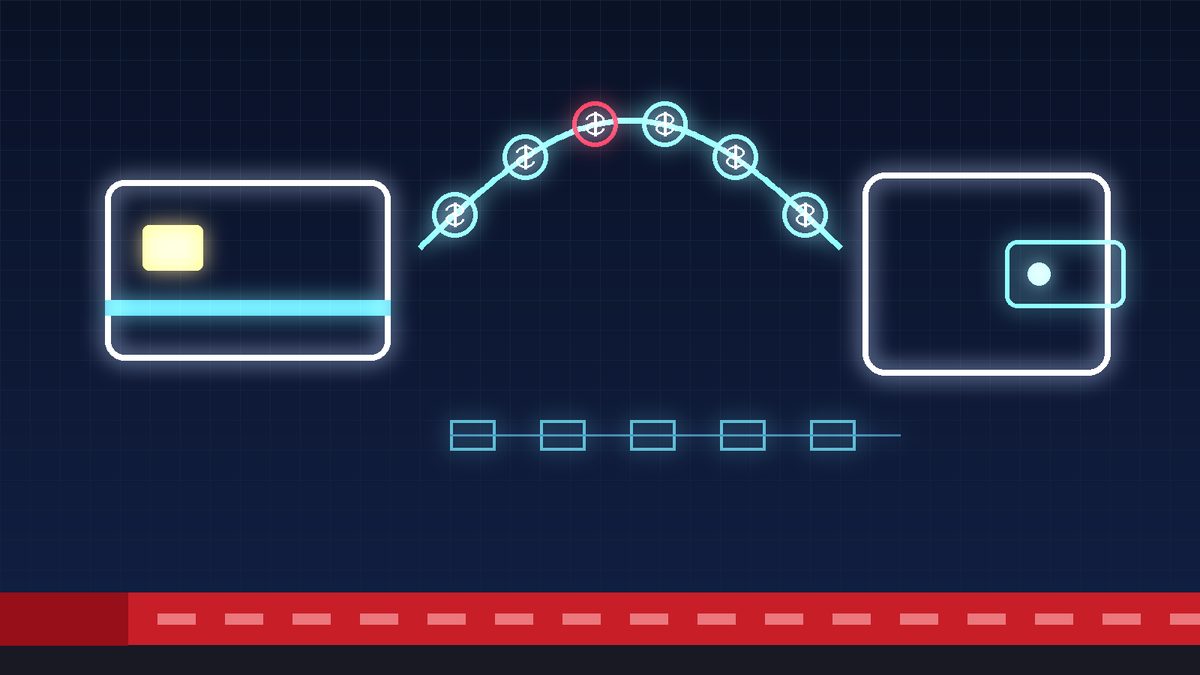
Trestly, the team behind the bridged kUSDT stablecoin on Kaspa, on Thursday, Nov. 26, opened a way to buy the token with a bank card, Apple Pay or Google Pay. “Sign once, pay, and kUSDT lands in your Kaspa wallet. Fees shown upfront,” the project posted on X at 4 p.m. ET.
The feature runs on Stripe’s crypto onramp and a new Ethereum contract that went live the same day. Trestly’s own documentation says the contract has not been independently audited and tells buyers to spend “only what you can afford to lose.”
How the purchase works
Kaspa is a proof-of-work network built as a BlockDAG, which keeps parallel blocks and orders them with the GHOSTDAG rule at about 10 blocks per second. Since the Toccata hard fork in June 2026, tokens can live directly on its base layer as covenants. kUSDT is one of them: a KCC-20 token that Trestly mints on Kaspa when USDT is locked in its vault on Ethereum or BNB Chain. It is a bridged token, not one issued by Tether.
According to Trestly’s guide, Stripe sells the buyer USDC and delivers it to the buyer’s own Ethereum wallet, after a one-time identity check. Stripe’s onramp does not sell USDT or KAS, so the buyer signs one permit for that exact USDC. A contract called BuyForwarderFactory then swaps it to USDT on Uniswap, “one for one, at most 0.1% less,” and deposits it into the kUSDT vault for the buyer’s Kaspa address.
Purchases run from $10 to $1,000 and are offered in the European Union and the United States. Trestly’s Terms of Service version 3, committed the same afternoon, removed an earlier exclusion of US users. No ETH or KAS is needed, because Trestly’s gas wallet pays the Ethereum fee and takes it back from the USDC, up to a maximum the buyer signs.
The whole process takes about 18 minutes. “stripe sends in 3-4 min then we wait for eth finality for 15 min or so,” kUSDT developer KaspaD’or (@kaspador_) wrote on Thursday.
What it costs and what is on-chain
The Buy page’s default $50 example shows a $2.02 card fee and a $0.31 network fee paid to Stripe, for a total of $52.33. An estimated $1.07 in Ethereum gas and a $0.10 bridge fee then come out of the USDC, leaving 48.83 kUSDT. By KaspaNews’ calculation, that is about $3.50, or 6.7% of the amount paid, on a $50 purchase. Card fees and gas do not scale the same way, so the share will differ for other amounts.
On the Blockscout explorer, the BuyForwarderFactory contract (0x9d9D…Aa60) shows as verified and deployed at 12:08 p.m. ET Thursday. Its first purchase went through at 6:41 p.m. ET: 50 USDC came in, 0.0489 USDC went to the gas wallet, and 49.99944 USDT landed in the vault. The docs say the contract “has no owner and no admin: nobody can change it.”
The kUSDT vault itself has grown. An on-chain check at about 8 a.m. ET Friday found 10,580.75 USDT backing the token, 3,587.55 on Ethereum and 6,993.20 on BNB Chain. DefiLlama tracked Trestly at $5,961 on Nov. 20 and $10,568 on Nov. 27, after the bridge cut its percentage fee to zero on Nov. 21.
Why it matters and what to watch
For Kaspa users, this adds a card route into a dollar token on Kaspa’s base layer that does not go through an exchange. It could matter for wallets such as Kaspire, which added in-app KAS/kUSDT swaps last week, and for the small Kaspa DeFi scene, where kUSDT trades against KAS in Trestly’s KasPool. Trestly has documented a wallet hook, kusdt_buyPermitContext, so other wallets can offer the same flow.
The risks are the same as for any kUSDT holder, plus a new layer. Minting and releases still depend on a 3-of-5 group of bridge signers. The Buy contract “was reviewed by the team, with attack rounds on a copy of Ethereum mainnet, but no independent audit has been done,” the guide says. Card refunds and disputes are handled by Stripe under its terms, and a stalled bridge leaves the USDC in the buyer’s wallet, from where it can be bridged by hand.
The scale is still small. Blockscout showed one purchase, of $50, through the contract by Friday morning. Watch whether purchase volume shows up in the vault, whether an outside audit is commissioned, and whether wallets adopt the permit hook. Trestly has also teased a zero-knowledge “kUSDT v2” without giving a date.
Sources
- https://x.com/trestly_io/status/2126058411477356570
- https://trestly.io/buy
- https://github.com/kaspador/kusdt-docs/blob/main/src/content/docs/getting-started/buy-with-card.md
- https://github.com/kaspador/kusdt-docs/commit/72c9feab
- https://github.com/kaspador/kusdt-docs/commit/0391cdd4
- https://eth.blockscout.com/address/0x9d9D5d596d9157b00317FCa7faCcb885DD3fAa60
- https://eth.blockscout.com/tx/0x1cfbb71cf79fc40df1da41b8755fc4f316e50e0e39e85a5d08e0764616de3006
- https://x.com/kaspador_/status/2126039963770978546
- https://defillama.com/protocol/trestly