Kaspa’s official developer documentation gained a new guide early Friday, Nov. 27, explaining how independent smart contracts on the network’s base layer can work with each other. The page, titled “Inter-Covenant Communication (ICC),” was written by core developer Michael Sutton and merged into the kaspanet/docs repository at 3:21 a.m. ET by contributor IzioDev, together with two related documentation updates.
A few hours later, builder Ross (@crono_walker) posted on the Kas Smiths forum that one of the call methods the guide describes “is what we have been running.” At 7:29 a.m. ET, Sutton also merged a pending upgrade to the Argent covenant language.
What the new page says
Kaspa is a proof-of-work network built as a BlockDAG. Instead of a single chain where competing blocks are thrown away, it keeps parallel blocks and orders them with a consensus rule called GHOSTDAG, at about 10 blocks per second. Since the Toccata hard fork in June 2026, it supports covenants: coins whose spending rules every node enforces, which act as Kaspa’s version of smart contracts.
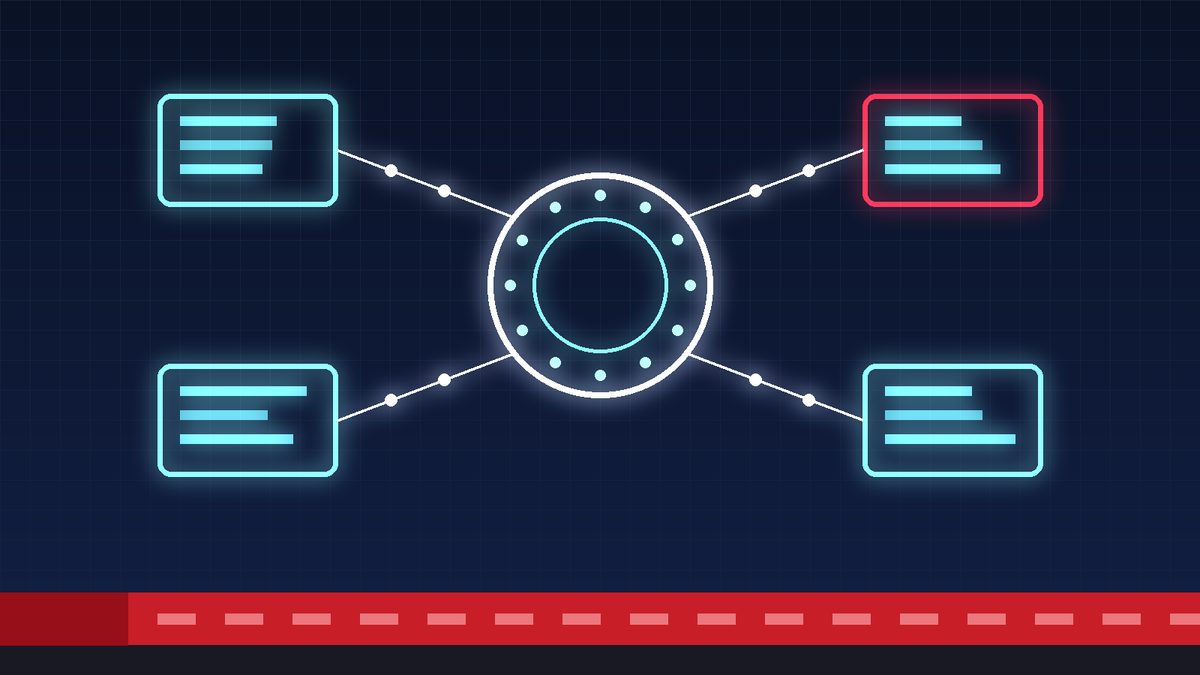
The new page starts from a key difference with account-based chains such as Ethereum. There, contract A calls contract B and the virtual machine runs B’s code inline. On Kaspa, “independent covenants compose through… co-spending in the same atomic transaction.” Each covenant checks its own state change and inspects what its peer is doing in the same transaction, and if any script fails, the whole transaction is rejected.
The guide sorts these interactions into four patterns. The simplest only checks that a peer covenant is present, and the page warns that presence “is not authorization scope.” The second reads a peer’s state directly, using fixed-width “state capsules” such as the 112-byte KCC-20 token state, so a DEX can handle tokens it has never seen. The third is dynamic dispatch, and the fourth lets a parent contract launch a child contract in one transaction, which factories and prediction markets need.
Calls without a call stack
Dynamic dispatch is the part Sutton first floated on the Kas Smiths forum on Nov. 24. A covenant sometimes wants an answer computed by another covenant’s logic, such as the fee for a swap or a verified oracle price. With “no runtime call stack” on a UTXO chain, the guide calls it “propose-then-verify”: the transaction carries a statement of method, arguments and result, and both the caller and the service check the same bytes.
The page compares two places to carry those statements. Option 1 puts them in the first push of the service input’s signature script, which avoids competing for space with other apps. It also warns that every non-serving entry point must enforce an empty message area, or an attacker “could craft a normal witness argument” that mimics a service answer. Option 2 uses the shared transaction payload, which “would require a shared payload-framing” convention, or KCC.
That trade-off was argued on X on Thursday. Sutton told Ross he would likely adopt the signature-script scheme “so there will be no urgent need for a kcc,” then wrote at 9:17 a.m. ET: “i embedded much of the discussion into” pull request #64.
Ross’s forum post, published at 6:30 a.m. ET Friday, says his team runs a price service whose entry arguments carry a committee-signed price that callers read at fixed offsets. He did not say whether it runs on mainnet or testnet. The thread had 33 views and no other replies by 8 a.m. ET.
Why it matters and what to watch
For builders, the page turns a week of forum and X debate into an official reference, alongside a new KCC-20 token showcase and fixes merged in PRs #61 and #62. Its worked example tackles a live problem: after the RISC Zero advisory forced a toolkit upgrade this month, it shows how apps could read the active zero-knowledge verifying key from a shared “key-registry router” instead of hard-coding it.
The limits are stated plainly. The typed interface and serve syntax for service calls is labeled “not yet implemented” in the Argent compiler, and the docs say Argent “still needs further audit and hardening before unreviewed general production use.” Sutton’s Argent PR #77, merged Friday after review, lets a covenant observe a bounded range of another actor’s inputs and outputs, a building block for these patterns, and grew to 1,713 lines added and 542 removed.
For holders, none of this changes the network itself, as no node upgrade or fork is involved. Watch for compiler support for serve, replies from other builders on the forum, and Kaspero Labs’ CATMA draft, which had asked to fit its records into the payload format the guide now treats as the second option. DAGKnight pull requests #1172 and #1181 in rusty-kaspa were updated this week and remain open.
Sources
- https://github.com/kaspanet/docs/pull/64
- https://github.com/kaspanet/docs/pull/61
- https://github.com/kaspanet/docs/pull/62
- https://docs.kaspa.org/programmability/composability
- https://kas-smiths.org/t/inter-covenant-communication-with-dynamic-dispatch/171
- https://x.com/crono_walker/status/2126281167909625925
- https://x.com/michaelsuttonil/status/2125957007429587225
- https://x.com/michaelsuttonil/status/2125927622144135468
- https://github.com/argent-lang/argent/pull/77